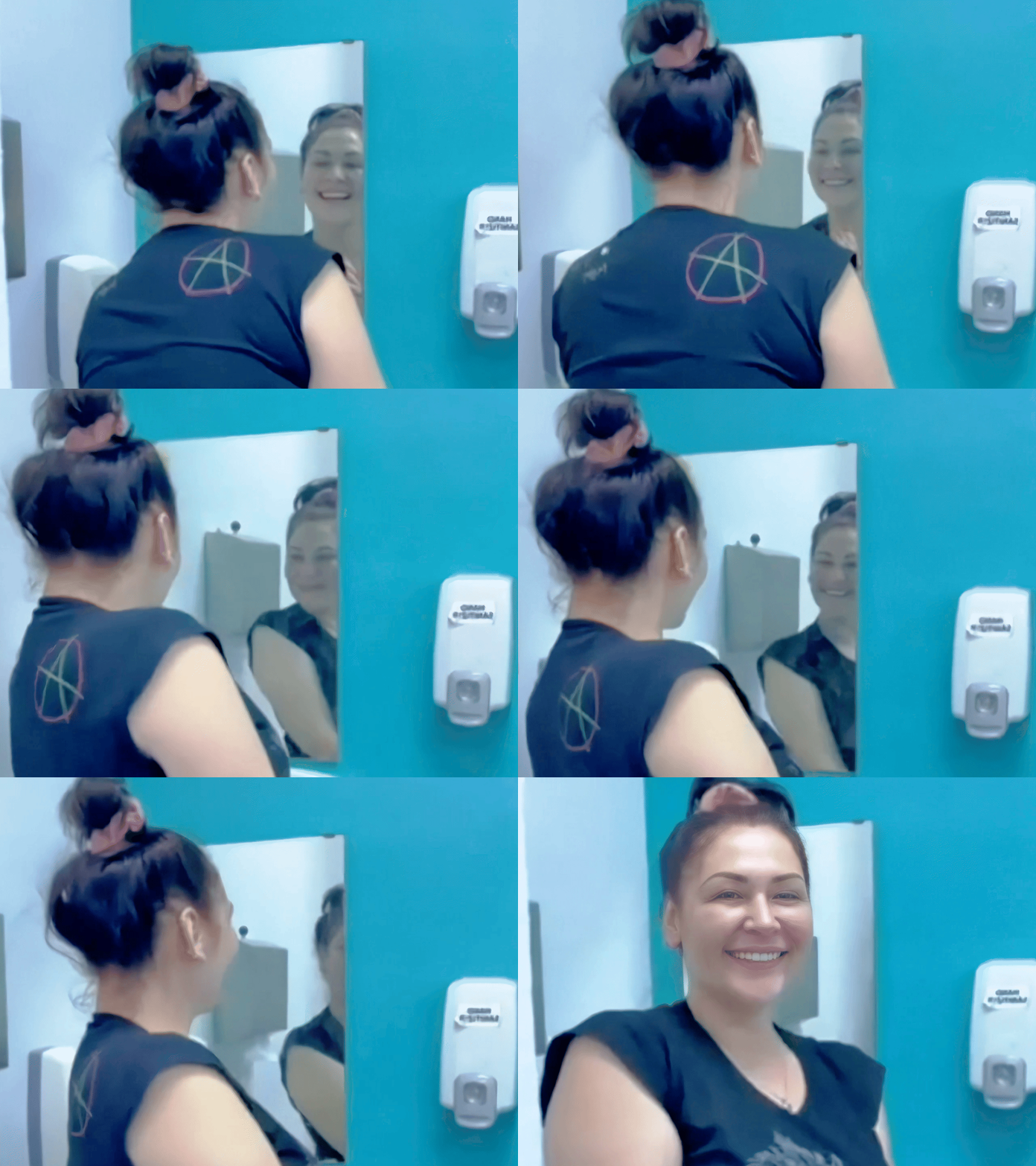
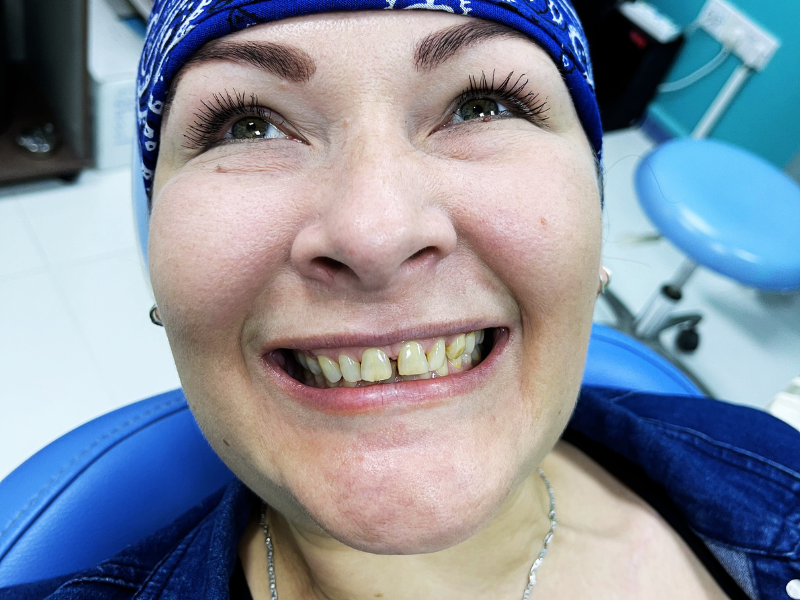
For this 35-year-old Russian patient, the transformation was not only about whiter teeth. It was about finally seeing a version of herself that felt bright, confident, and natural. Before the procedure, her smile already carried warmth and personality, but the teeth were visually holding back the expression of her face. The upper front teeth showed noticeable shade irregularity, yellow-brown discoloration, uneven tooth shapes, spacing differences, mild crowding/rotation, and irregular edges. These are the kinds of details that can make a person feel conscious in photos, even when they are naturally cheerful.
From a clinical and aesthetic point of view, the case called for more than simply “making teeth white.” A smile transformation with veneers must respect facial balance, lip movement, tooth proportions, gum visibility, and the patient’s natural personality. The goal is not to create a generic Hollywood smile, but to design teeth that look harmonious when the patient speaks, laughs, and smiles naturally.
“I could not stop smiling when I saw myself — it finally felt like the smile I always wanted.”
The Visible Smile Concerns
Uneven tooth color, especially across the upper front teeth
Yellow-brown staining and reduced brightness
Irregular tooth shape and size
Mild crowding and rotation in the smile zone
Uneven incisal edges affecting smile symmetry
A narrow, less uniform smile appearance
Reduced visual harmony between teeth, lips, and face
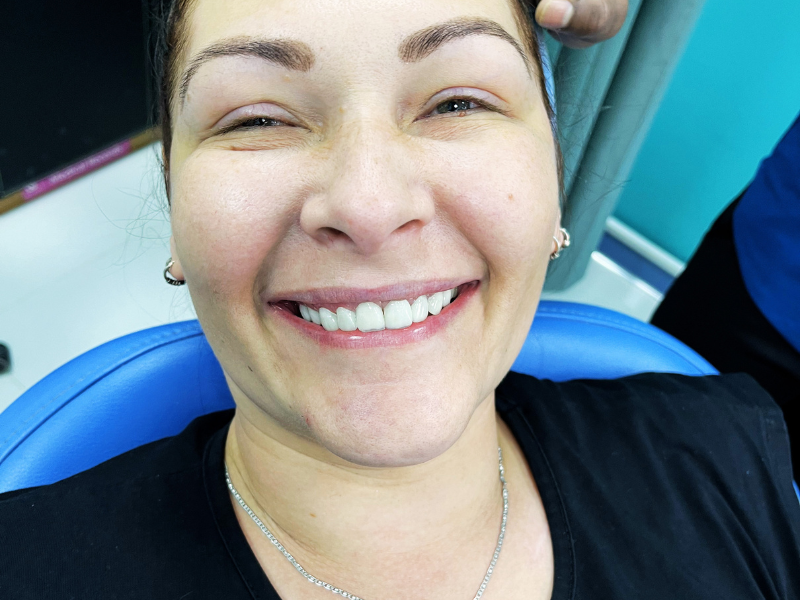
After the procedure, there is a dramatic but soft transformation. The veneers created a brighter, more even smile with improved tooth proportions, smoother edges, better alignment appearance, and a cleaner smile arc. The shade looks fresh and luminous without overwhelming her facial features. Instead of looking artificial, the result appears to support her natural warmth.
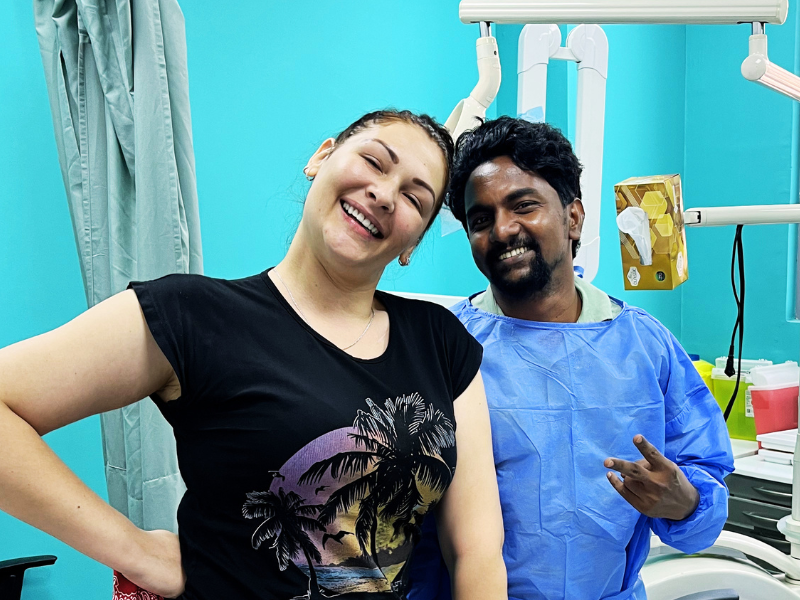
What stands out most is not just the dental change, but the emotional change. Her smile looks relaxed. Her facial expression became lighter. The eyes, cheeks, and mouth all communicate the same thing: she is happy with what she sees.
Plan of Action
Scientifically, veneer transformations work by improving the visible surface of the teeth while correcting aesthetic disharmony in color, contour, proportion, and alignment appearance. In a case like this, veneers can visually mask discoloration, reshape uneven teeth, close small irregular spaces, and create a more balanced smile line. However, the success of the result depends on careful planning: the teeth should complement the patient’s face, not dominate it.
For this patient, the emotional impact was immediate. She did not just receive a new smile; she received a new relationship with her own reflection. For someone who may have spent years noticing stains, irregular edges, or uneven teeth in photos, the first look at the final result can feel deeply personal. It is a moment of relief, joy, and surprise.
This case is a beautiful example of how we combine science and emotion. The science is in the planning: shade selection, tooth proportions, symmetry, bite considerations, and material design. The emotion is in the moment the patient sees the result and realizes she no longer has to think twice before smiling.
Her transformation shows that veneers are not only about appearance. When designed thoughtfully, they can help restore confidence, comfort, and self-expression — allowing the person behind the smile to shine more freely.